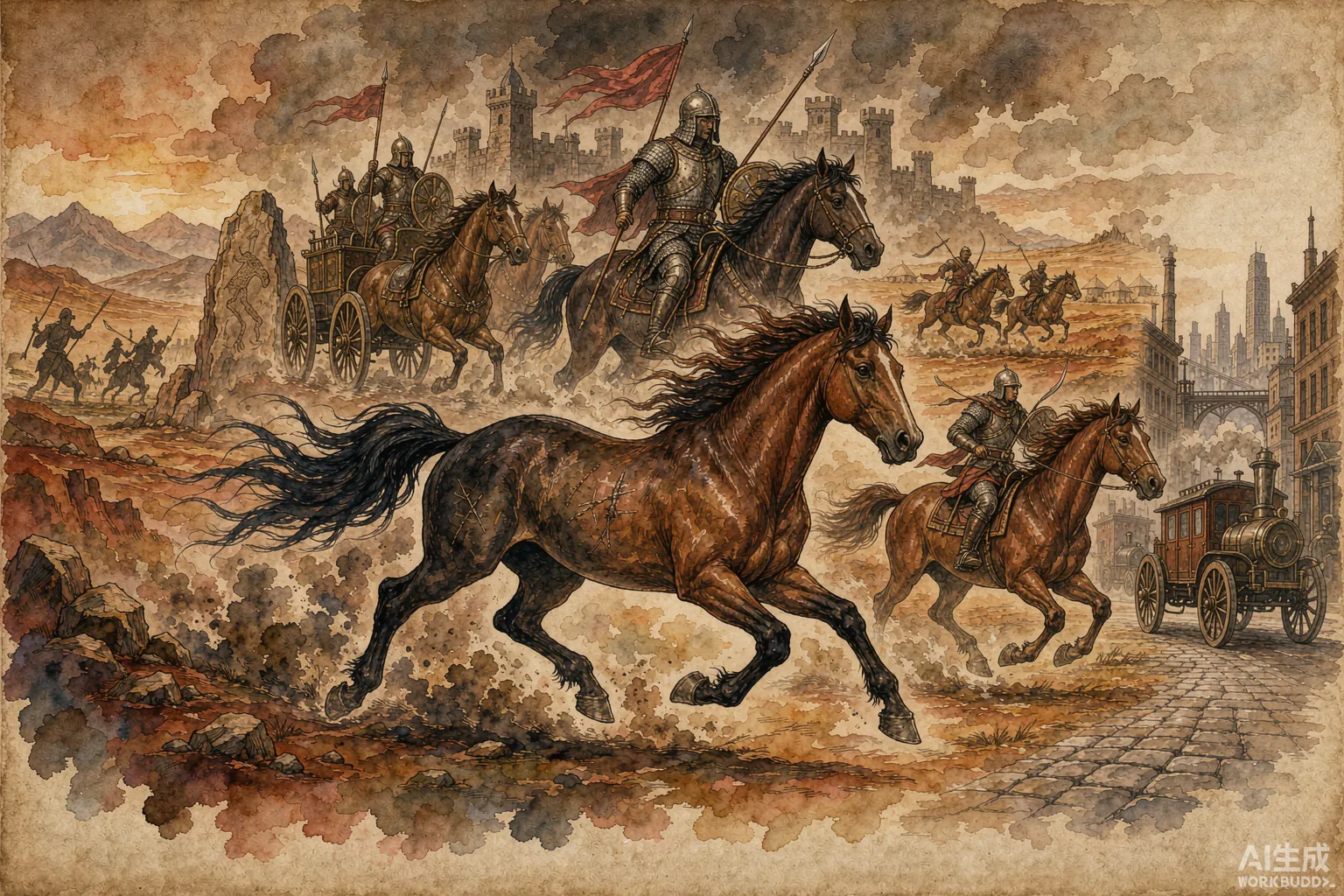
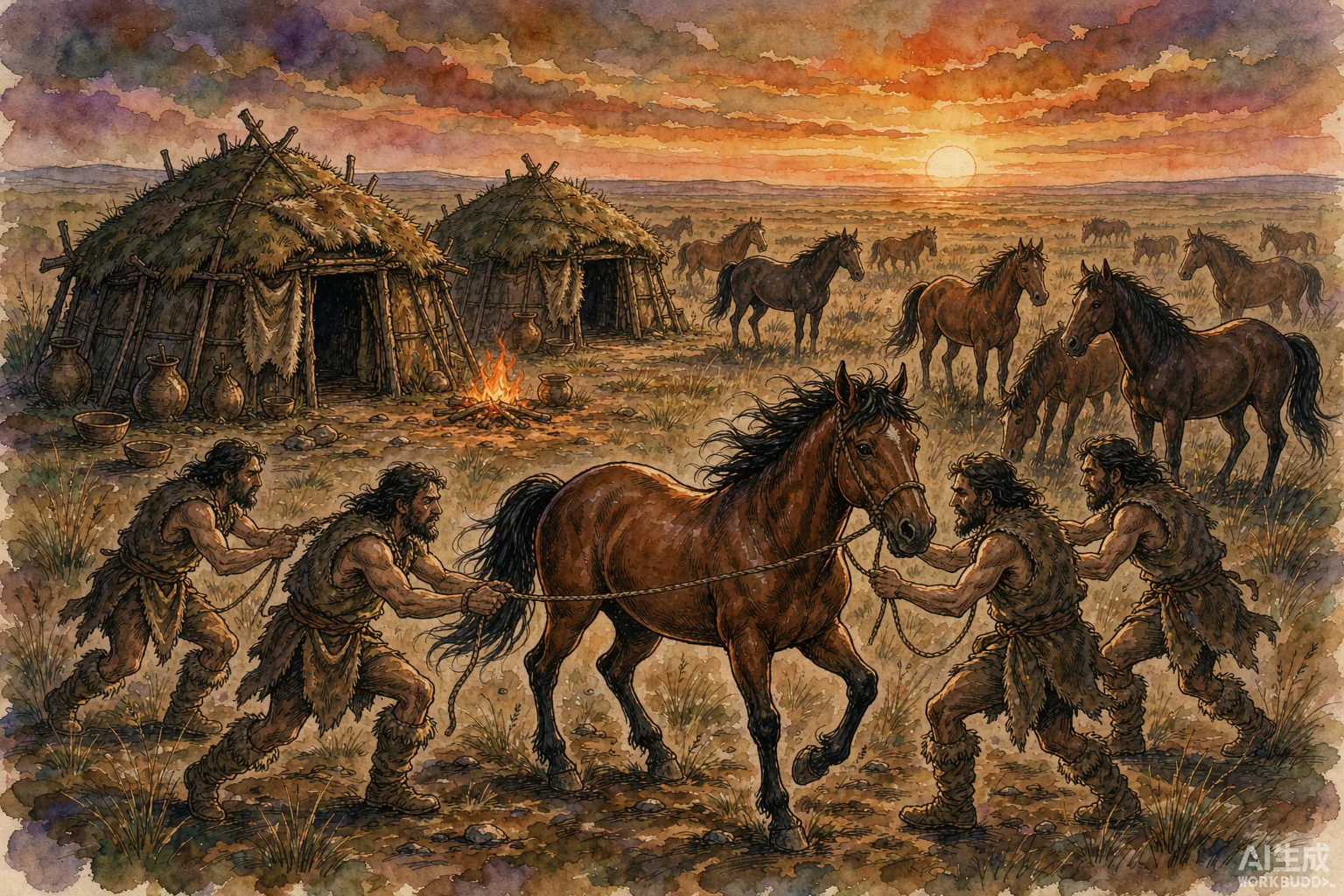
Historian's NarrationThe story begins at the Botai site in Kazakhstan. Archaeologists have unearthed mountains of horse bones, layers of horse dung, and horse milk fat residues on pottery shards—the earliest known evidence of horse domestication, dating back about 5,500 years. The initial motivation may not have been romantic: for meat, for milk. But the people of the steppe soon discovered that once this vigilant, swift animal trusts you, it can expand your world to boundaries you never imagined.
◆ Historian's Note: Why the Horse?
Before horse domestication, a walking herder's daily activity radius was about 30 kilometers; with a horse, one could gallop over 100 kilometers a day. Don't underestimate this number—distance determines power. Whoever could travel far could exchange goods from farther away, gather followers from farther away, and transmit messages farther away. The domestication of the horse was essentially humanity's first "engine."
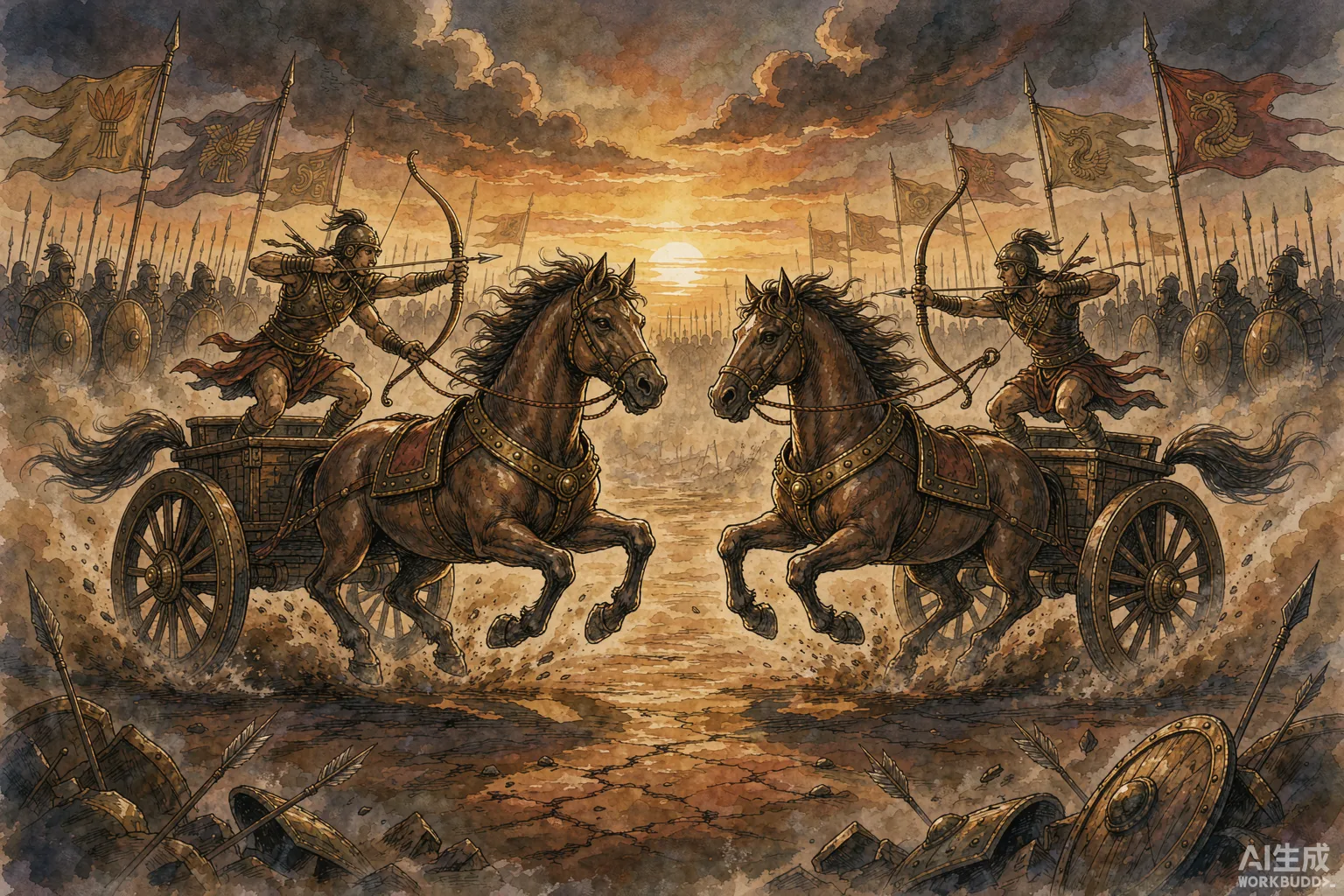
Historian's NarrationInterestingly, humans did not immediately jump on horseback—the horse's body structure made early riding slow and bumpy. So people first let horses pull chariots. The light two-wheeled chariot was the "tank" of the Bronze Age: the Hyksos rode it into Egypt, the Hittites used it to dominate Anatolia, and in the East, Lady Fu Hao, wife of King Wu Ding of Shang, also led chariots and tens of thousands of foot soldiers into battle. Families with chariots almost invariably became the nobility of their time.
◆ Historian's Note: How Technology "Travels"
Chariot technology spread along a clear route: steppe → oasis → river valley civilizations. This illustrates a principle—new things always spread along lines of human contact. This is why Bronze Age civilizations, though separated by thousands of miles, buried almost identical chariots in their royal tombs. The earliest "international elite circle" formed around horse-drawn chariots.
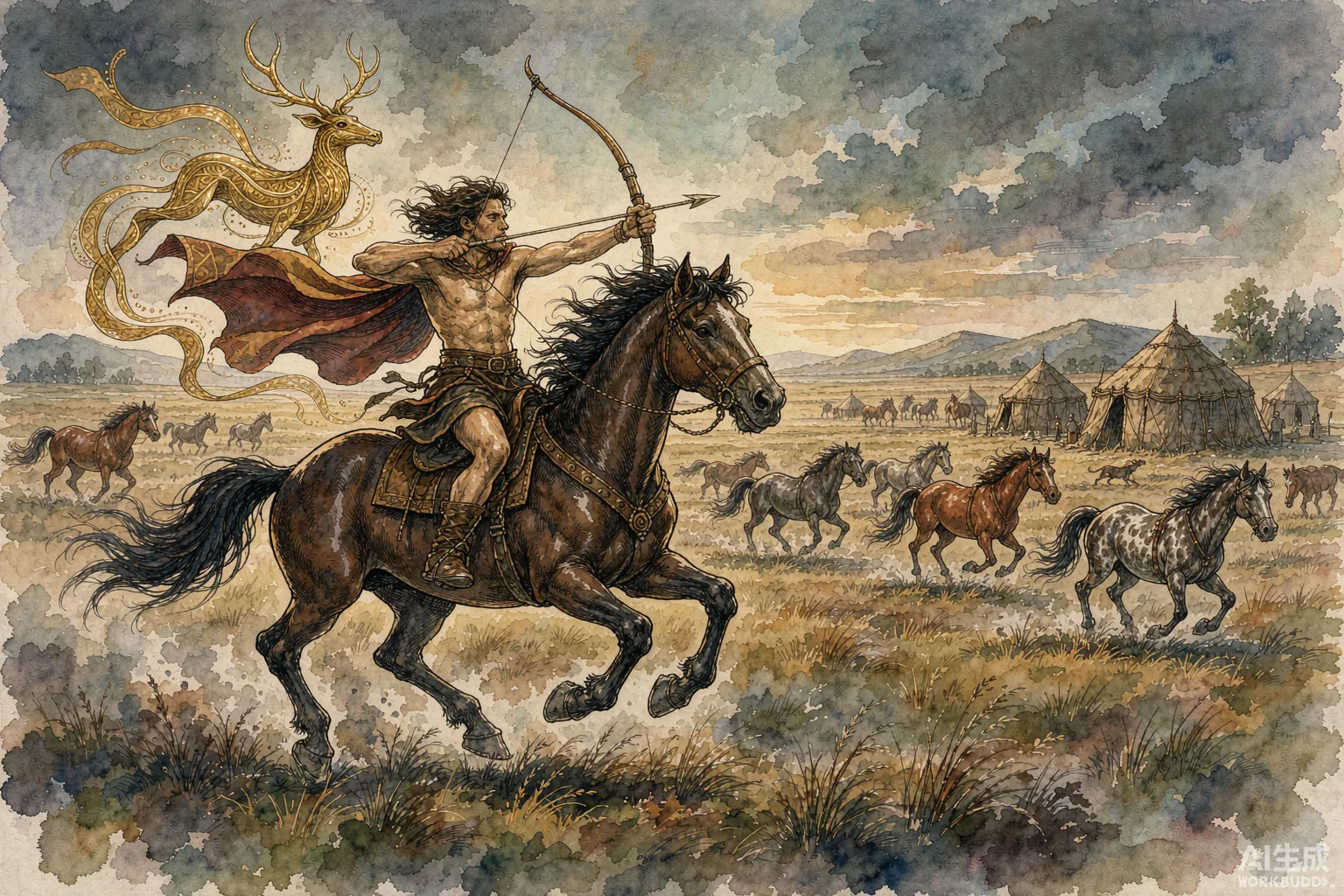
Historian's NarrationWhen bits, cheekpieces, and riding skills matured, humans finally truly rode on horseback. The Scythians of the Black Sea steppe, the Xiongnu of the Mongolian steppe, developed complete nomadic lifestyles: driving horse herds to follow water and grass, growing up on horseback from childhood. From then on, a pair of entangled opponents appeared on the historical stage for three thousand years—agricultural empires and nomadic cavalry.
◆ Historian's Note: Horses "Forced" States to Invent Institutions
Facing cavalry with overwhelming mobility, agricultural civilizations were forced to make institutional designs: the Qin and Han established massive state horse administration (stables, pasture offices), Emperor Wu of Han sent envoys thousands of miles and launched expeditions to Dayuan for fine horses. The Great Wall was not just a wall, but a "anti-cavalry system" coordinating beacon towers, post roads, and border troops. It can be said that the horse first made a country establish a complete bureaucratic apparatus for its "animal resources".
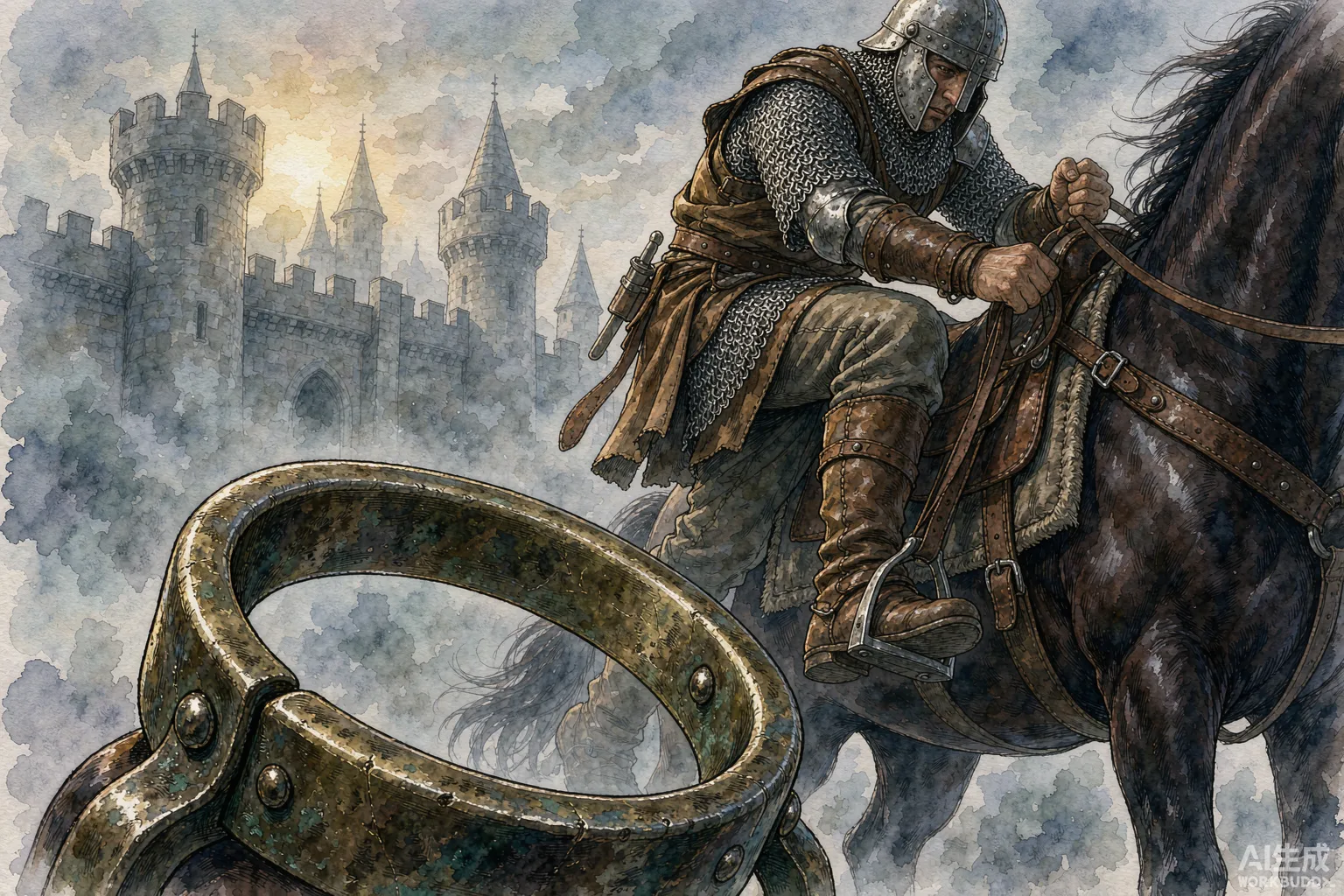
Historian's NarrationThe protagonist of this page may be the most unremarkable revolutionary in history—an iron ring. With stirrups, riders' feet had a fulcrum, allowing them to steadily brace lances for charging and swing swords for slashing on horseback, merging human and horse into a "weapon system." The rise of heavy armored knights in medieval Europe, the knightly class, and even the feudal system are all related to it. Historian Lynn White even said: the small stirrup "changed the world."
◆ Historian's Note: Small Invention, Big Consequences—But Beware "Technological Determinism"
Stirrups did lower the threshold for mounted combat and strengthen the knightly class, but institutional change was never caused by a single factor: land systems, legal customs, and church attitudes also played roles. The historian's training is here—seeing the leverage of key technologies while not reducing complex history to a solo performance by one invention. Chinese stirrups appeared earliest in the Wei, Jin, and Northern and Southern Dynasties, centuries before Europe, yet did not produce an identical knightly system—this is precisely the evidence.
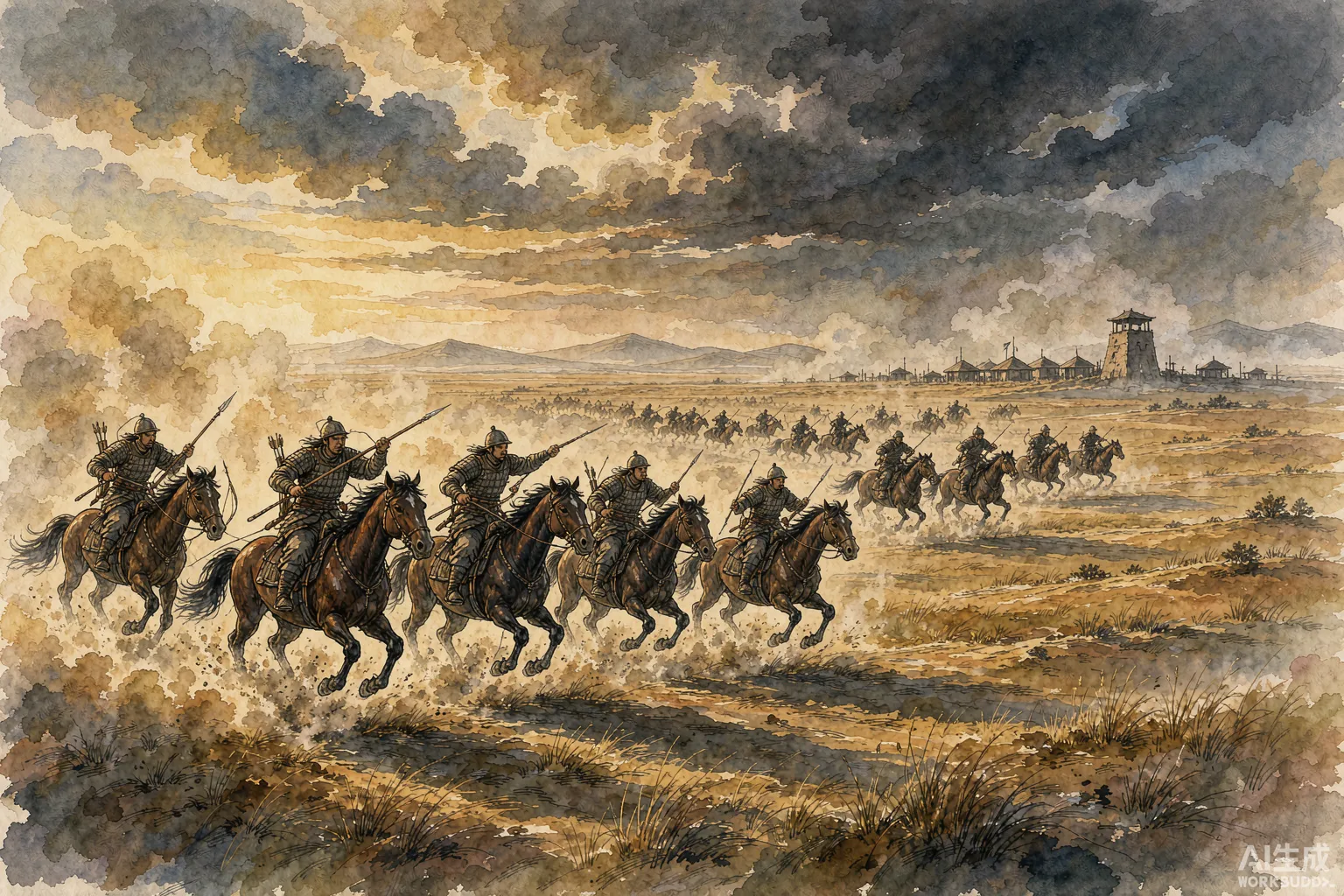
Historian's NarrationIn the 13th century, the combination of horses and humans reached its peak. Each Mongol cavalryman carried three or four horses to rotate riding, allowing continuous day-and-night galloping; even more remarkable was the empire's postal station system "Jam"—approximately every 25 to 30 li a station was set up, messengers changed horses but not people, urgent military intelligence could travel hundreds of li in a day. From Dadu to Karakorum, from the steppe to Persia, the size of the empire depended on how far a messenger could run in a day.
◆ Historian's Note: Horses Were Not Just Weapons, But Information Networks
We are accustomed to attributing the Mongol Empire's success to cavalry, but what truly made it "governable" was the postal transmission system—it allowed edicts, intelligence, caravans, and envoys to flow at the speed of horses. Marco Polo traveled east on this postal road. Whether an empire can govern often depends not on the speed of conquest, but on the speed of information transmission—this principle still holds in today's information society.
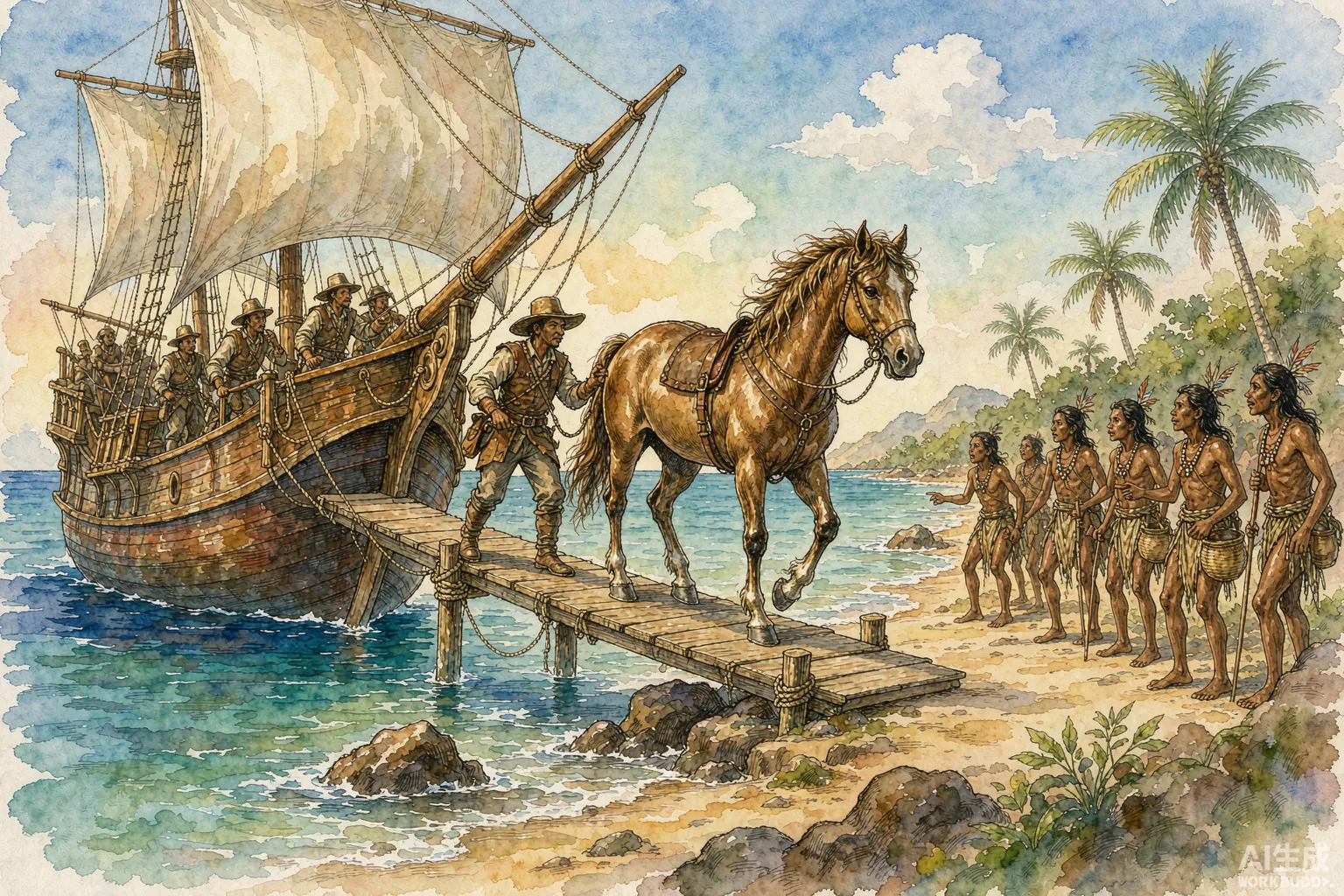
Historian's NarrationFew people know: the Americas are actually the horse's homeland—over ten thousand years ago, American wild horses went extinct, and forty generations later, around 1492, the Spanish brought horses back to this continent. When someone led horses off the ship, indigenous peoples who had never seen large livestock were stunned. Within just a few decades, Native American tribes on the North American plains once again became formidable "horse peoples," and wild horse herds galloped again on their ancestral land.
◆ Historian's Note: The Columbian Exchange
Historian Crosby called this cross-continental species flow the "Columbian Exchange": horses, cattle, wheat went to the Americas; corn, potatoes, tobacco came to the Old World. Horses returning to the Americas changed the hunting, warfare, and power dynamics of Plains tribes, profoundly influencing North American history for centuries thereafter. History is never written only by humans—every species' migration rewrites the script of civilization.
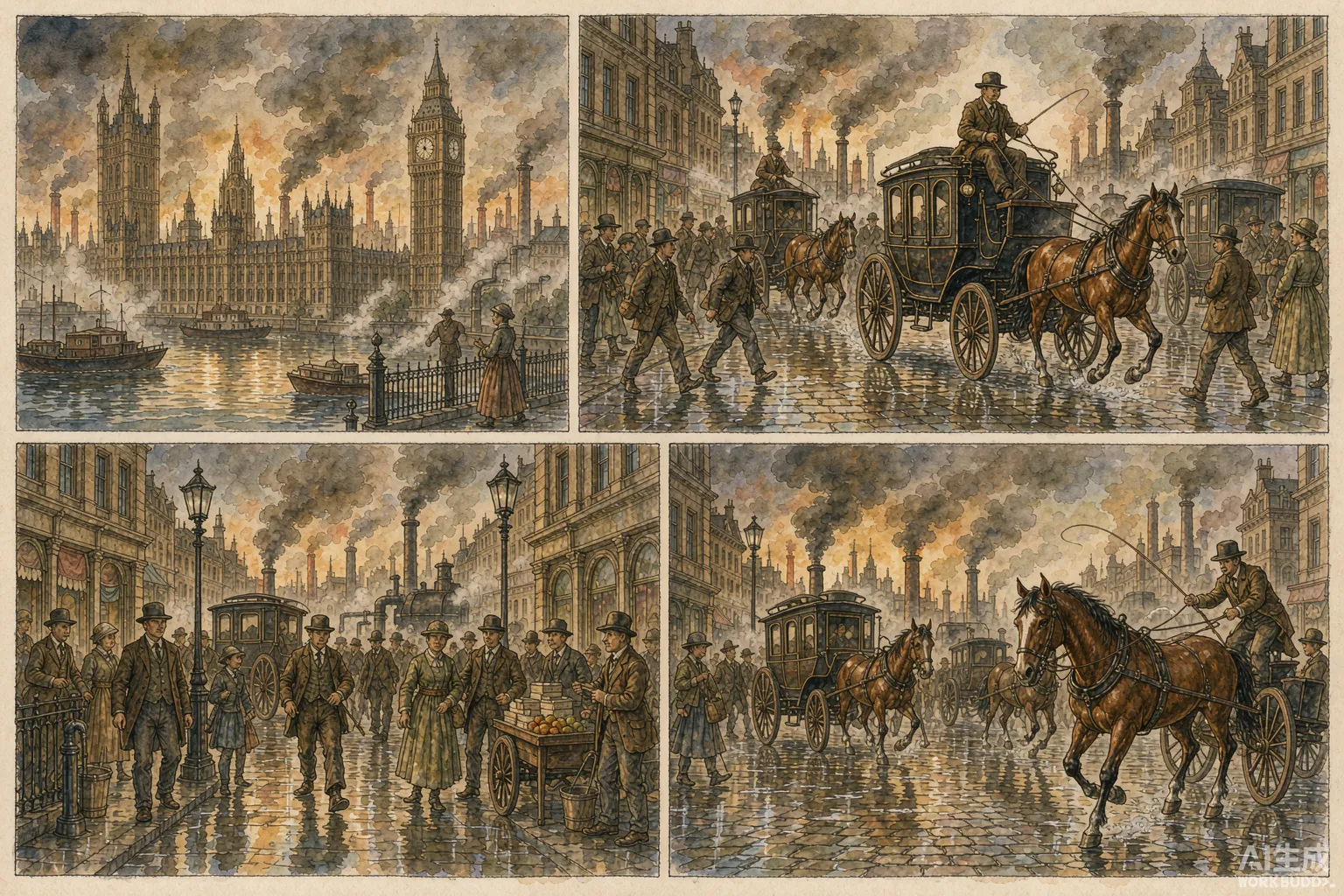
Historian's NarrationEven as steam engines roared, 19th century cities still trod on horse hooves. At the end of the century, London had about 100,000 horses: pulling coal, delivering milk, dragging double-decker buses. The entire city relied on horses to function—all the city's food, fuel, and goods were transported in and out to the sound of hooves clattering on cobblestones. Incidentally, we still use "horsepower" to measure engine power today, precisely because engineers wanted people to understand at a glance: this machine can replace how many horses.
◆ Historian's Note: The Horse Manure Crisis—History's Irony
In the 1890s, New York had to clean up about 2 million pounds of horse manure daily; the "urban horse manure crisis" was the top challenge in urban planning at the time, meeting after meeting was held, with pessimistic conclusions: cities would be submerged in horse manure. And what ultimately solved the problem was not better horses, but cars that replaced horses. Remember this case: facing systemic problems, the solution often lies not in patching the old framework, but at the entrance to the next era.
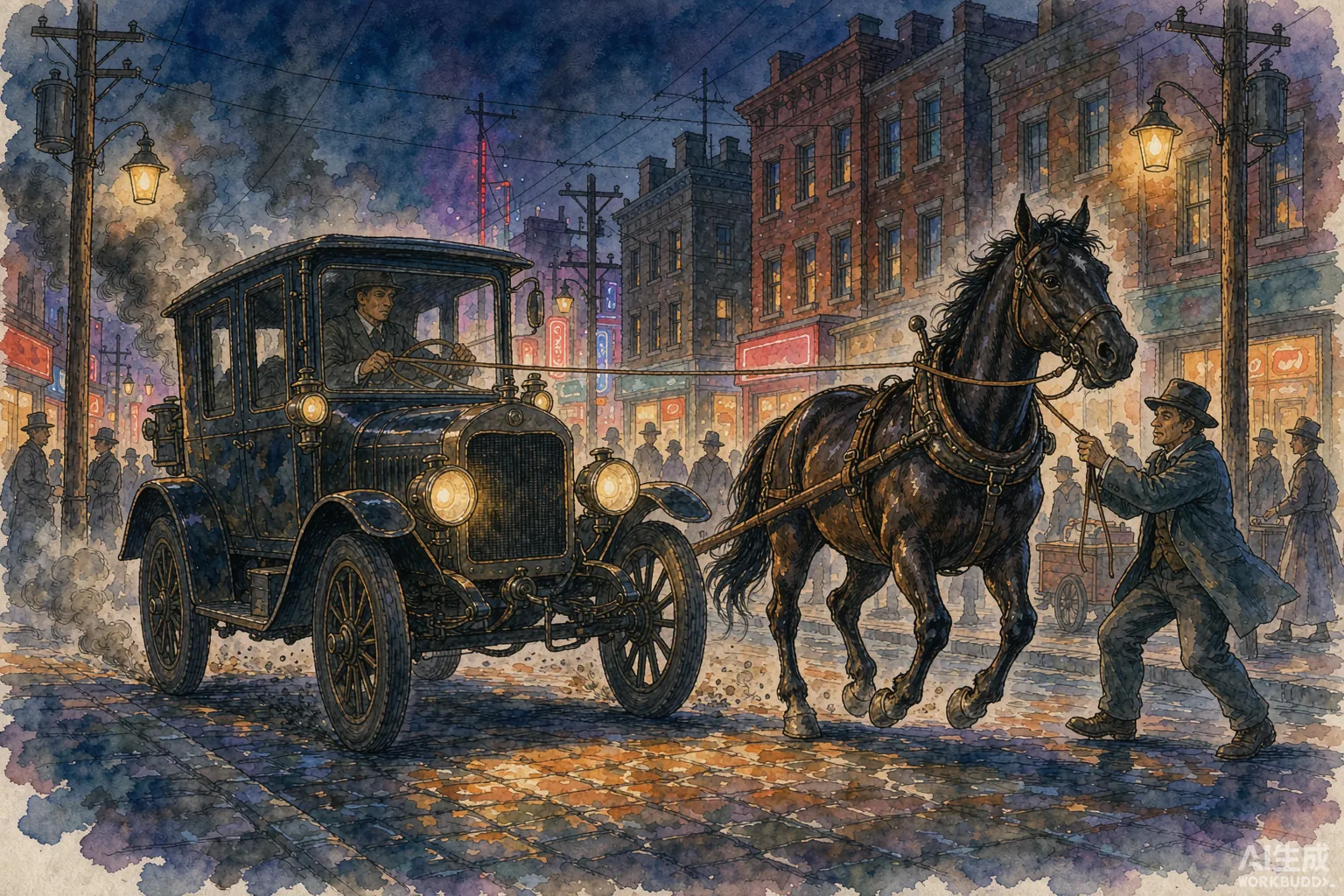
Historian's NarrationThe 20th century came faster than all horses anticipated. Millions of horses still served in World War I, carrying artillery, pulling carts, and thousands upon thousands never returned home; just thirty years later in World War II, horses had almost disappeared from battlefields; another twenty years later, tractors and trucks took over fields and roads. Thousands of years of division of labor ended within a generation. But horses did not exit the stage—they changed from "tools" to "partners": equestrianism, horse racing, equine therapy,草原 riding expeditions.
◆ Historian's Note: Replacement Is Never Just "Switching to Something Faster"
Cars replacing horses simultaneously rewrote urban scale, fuel landscapes, occupational structures, and even the smell of air and streets—what was eliminated was not just an animal, but the entire social morphology built around it. Every replaced era leaves an invisible accumulation. Students, when you think of today's artificial intelligence, this history may not be so distant.
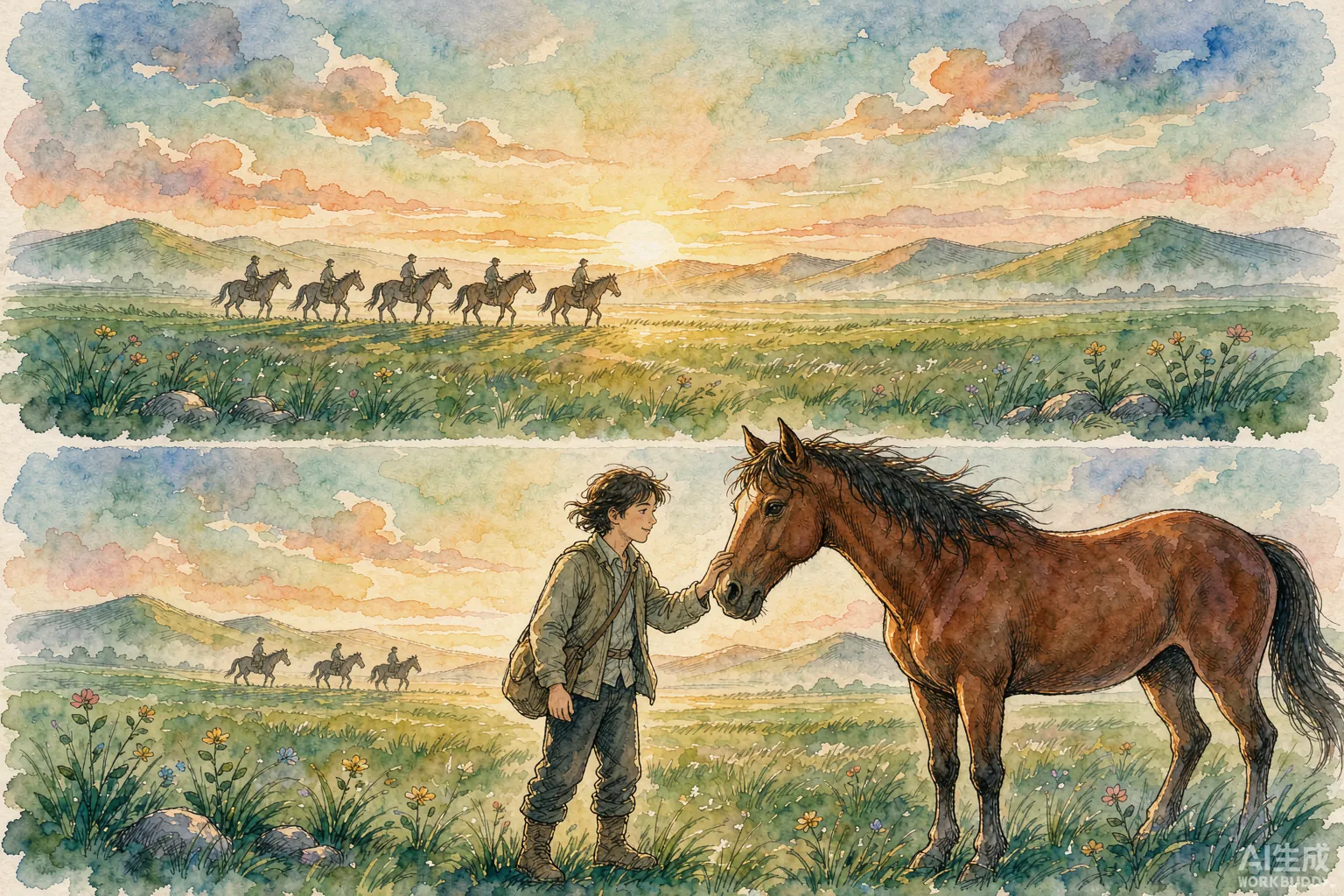
Historian's NarrationDear students, having read this far, allow me to speak from the heart. We often say humans domesticated horses, but in a sense, horses also "domesticated" us: because of horses, humans had cavalry and empires, post roads and trade routes, knights and nomads, and have always been building Great Walls, establishing horse administration, constructing postal stations, and clearing horse manure. For five thousand years, humans and horses shaped each other, neither stopping.
Therefore, the historian's conclusion is: what we call civilization is a mutual domestication lasting five thousand years. Horses have now withdrawn from battlefields and roads, yet remain in our language (horsepower, dark horse, taking the lead), sports, art, and memory in another way. And the next "partner" to shape us mutually—whether new technology or new species—is waiting somewhere in the future. The meaning of reading history is to let us recognize and think clearly when it arrives.
◆ Three Questions for the Whole Book (discuss with classmates and write your answers)
1. If horses had never been domesticated, what specific differences would human history have?
2. From chariots, stirrups to postal stations and cars, which turning point in this comic do you think is most important? Why?
3. What is the "new partner" profoundly changing humans today? What lessons and wisdom can we learn from the history of horses?