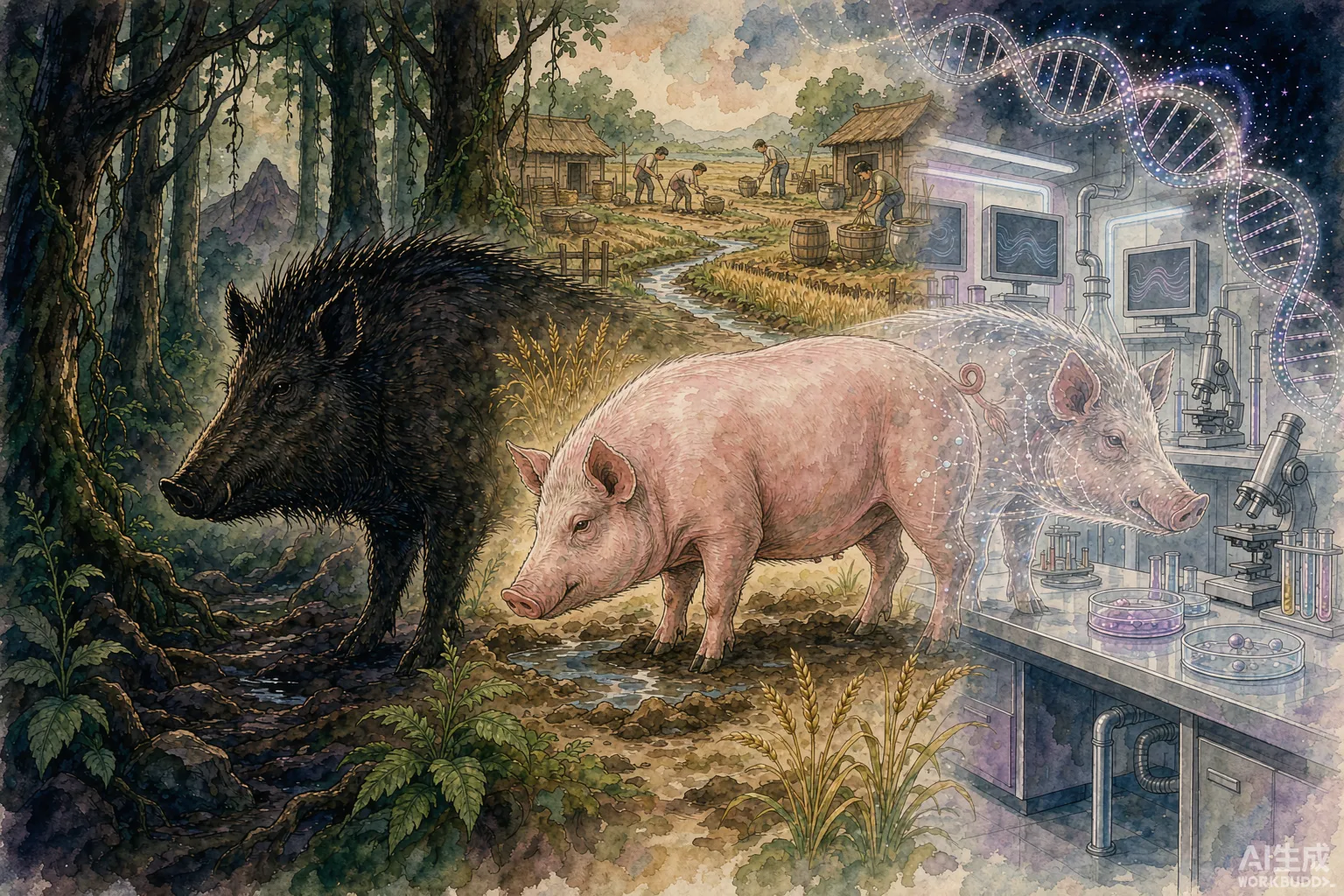
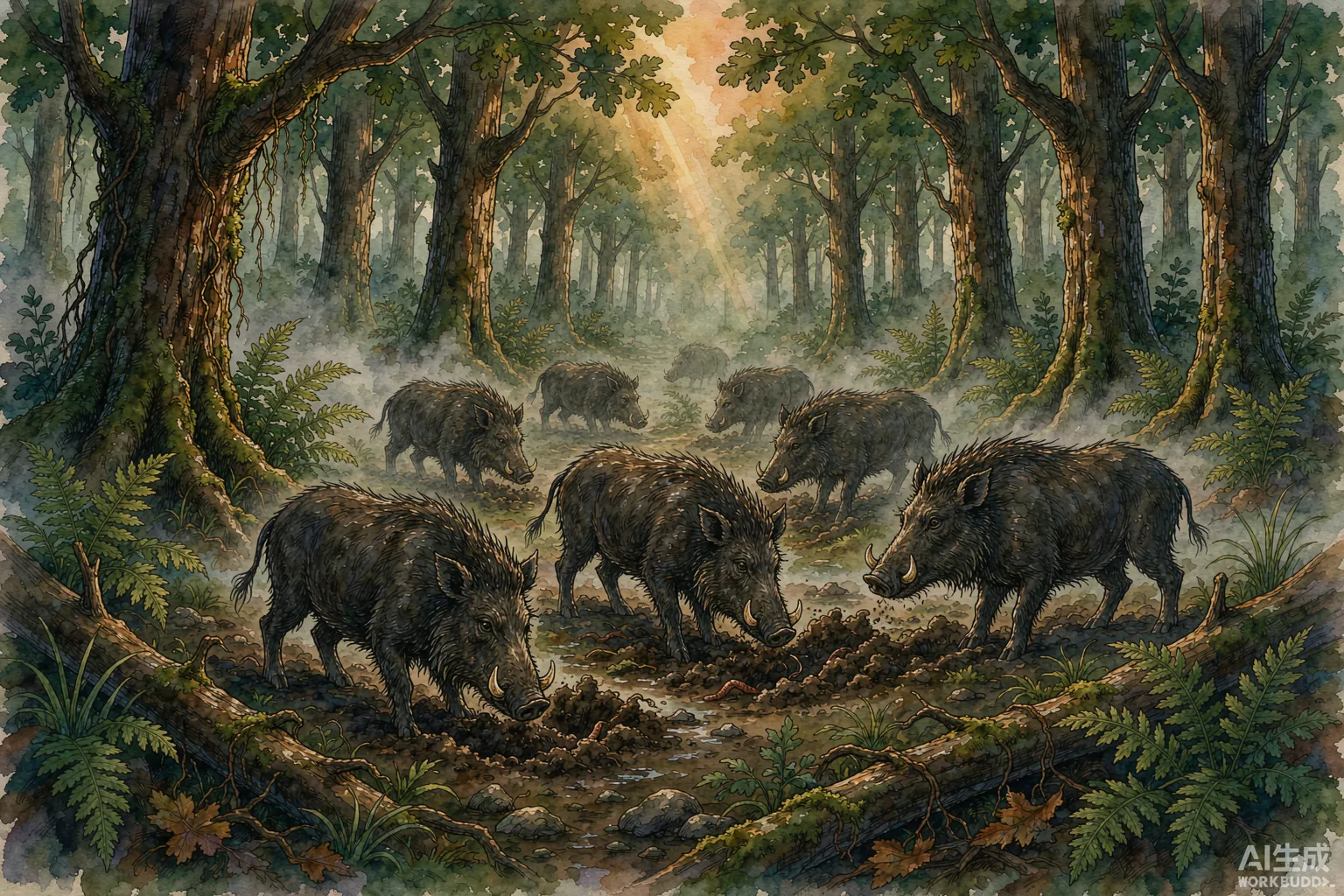
Historian's NarrationBefore reading history, we must read natural history—far longer in scope. The ancestors of the pig family were already roaming Eurasia tens of millions of years ago. Our familiar protagonist—the wild boar—shaped itself over hundreds of thousands of years through the advance and retreat of glaciers, becoming one of the most widely distributed large wild mammals: from the oak forests of Western Europe to the rainforests of Southeast Asia, from river marshes to alpine meadows, its snout has turned the soil. How did it win? The answer lies in its way of life.
◆ Science Insight: The Basic Logic of Evolution
The formula of modern evolutionary theory is simple: Variation + Selection + Heredity = Evolution. Each generation of wild boars showed random differences in diet, physique, and alertness. The environment acted as a silent examiner, keeping only the highest-scoring combinations. The wild boar's omnivorous diet and high reproductive rate are answers honed through millions of years of "exams."
Look for evidence around you: the stripes on wild boar piglets are strikingly similar to those of deer, tapirs, and other species' young—this is called juvenile similarity, living proof that different species share ancient ancestors. Evolution has no predetermined direction, but logic is everywhere.
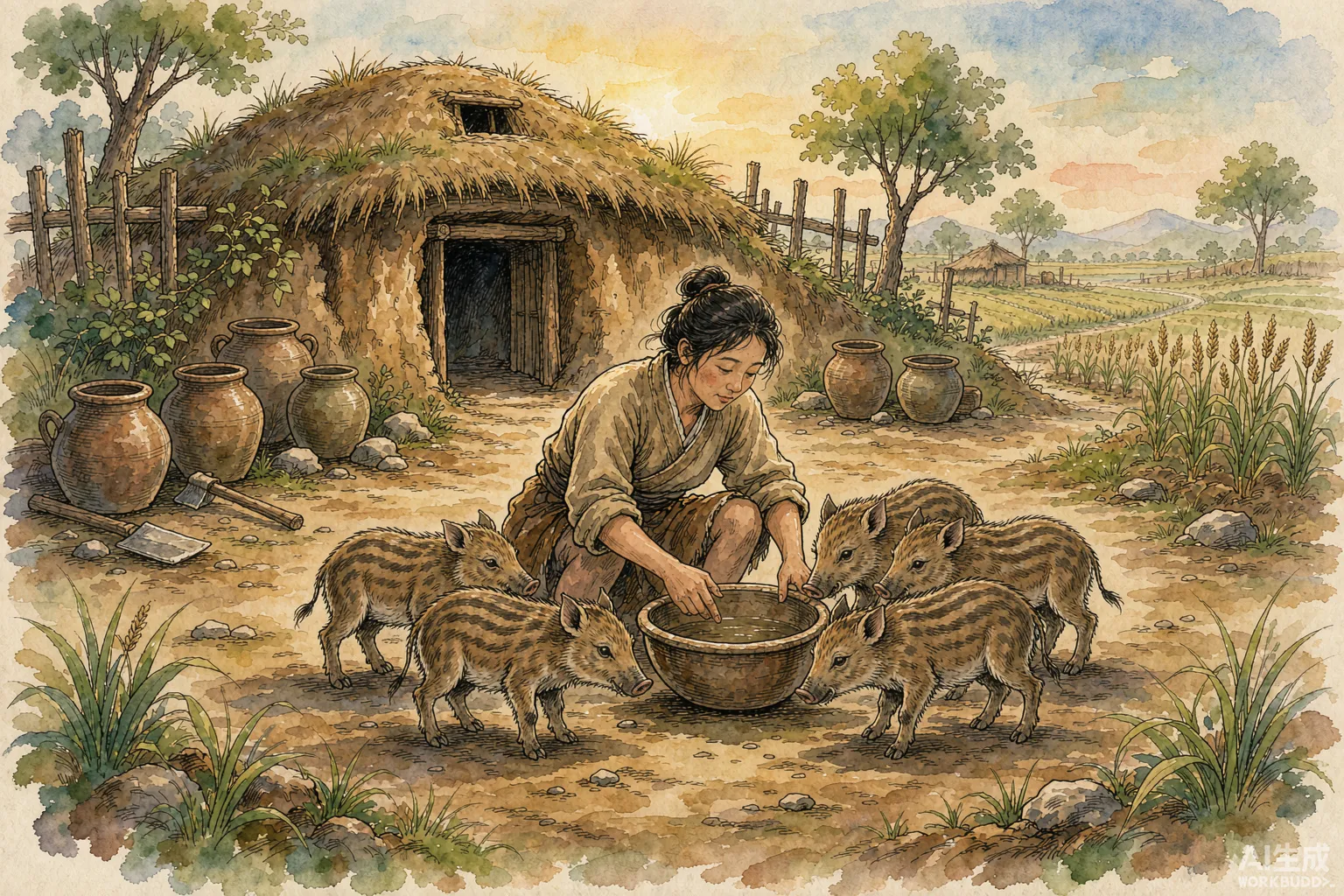
Historian's NarrationAbout ten thousand years ago, a similar scene played out almost simultaneously on two continents. In Western Asia's Anatolia, farmers began penning nearby wild boars; in the East, the early people of the Yellow River Valley were doing the same. Pig bones excavated at the Jiahu site in Henan, dating back about nine thousand years, show forms caught between wild boar and domestic pig—like a negotiation still in progress. Genomic research delivered the verdict: these were two independent domestication events, different paths to the same destination. Pigs thus joined dogs as among the earliest animals domesticated by humans.
◆ Historian's Notes: Domestication as a Symbiotic Contract
Domestication wasn't a single "capture"—it was hundreds or thousands of years of mutual adaptation: humans provided food scraps, shelter, and protection; pigs provided meat, hide, bone, and sacrificial offerings. Archaeologists now use "dual verification" to study domestication—skeletal morphology from sites (archaeological evidence) combined with ancient and modern DNA comparisons (molecular evidence). Only when both chains of evidence align does the story hold.
◆ Science Insight: The Molecular Clock—Reading Time Through Genes
DNA mutations accumulate at a roughly steady rate, like a slowly ticking clock. By comparing the mitochondrial DNA of modern domestic pigs, wild boars from various regions, and ancient pig bone remains, we can work backward to determine when populations diverged, how many times domestication occurred, and whether wild boar genes continued flowing into domestic pigs. Research shows: domestication was not a one-time, one-way street, but long-term genetic exchange under "semi-wild" conditions—wild boars kept "cutting in line" to the domestic pig herds. Domestication is a dance with no final curtain.
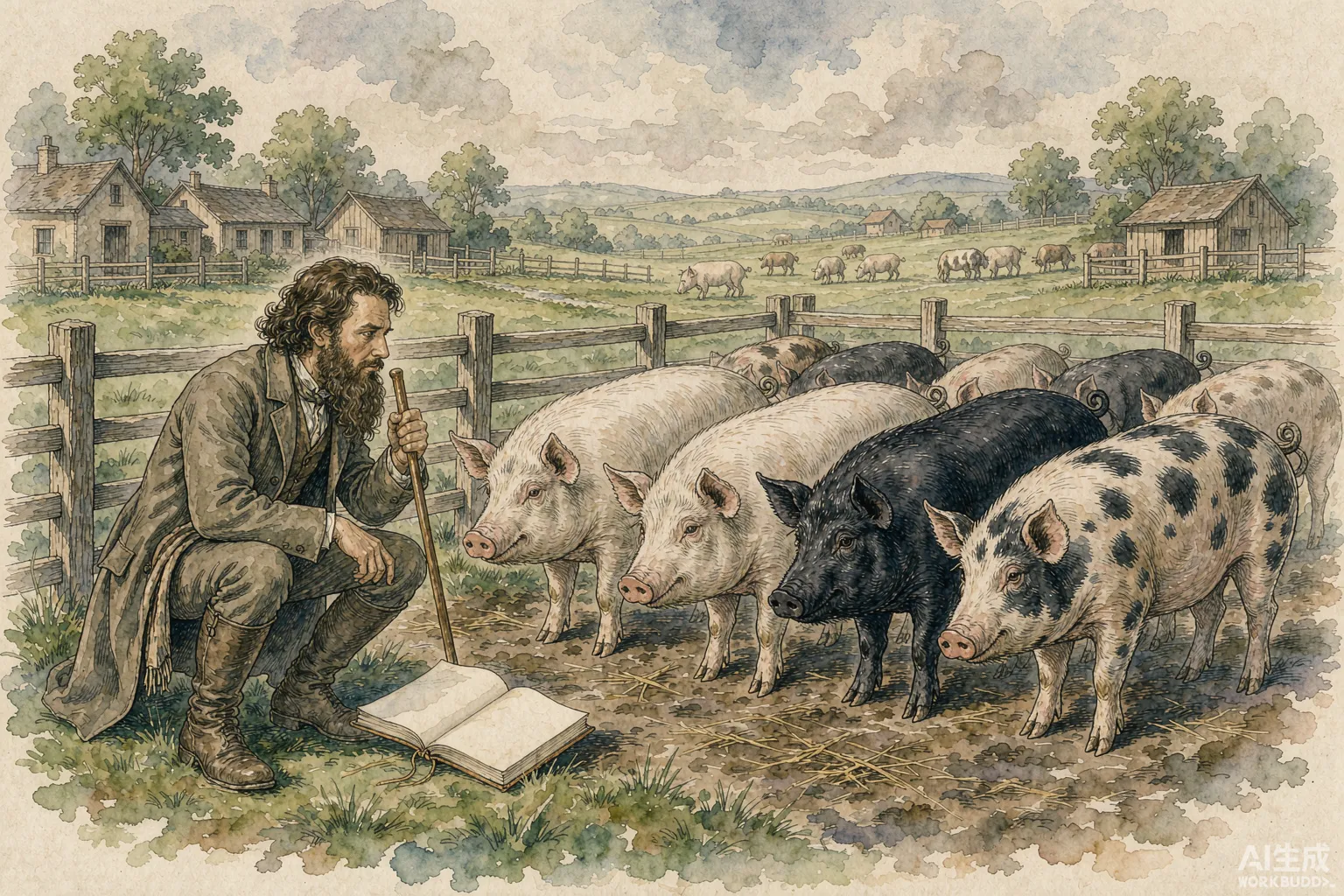
Historian's NarrationIn 1859, Darwin published "On the Origin of Species." Many assume he started with the Galápagos finches, but his first chapter was "Variation Under Domestication"—discussing dogs, pigeons, and pigs. Victorian-era British breeders had, in just decades, "created" pig breeds with vastly different sizes, coat colors, and temperaments. Darwin keenly seized on this evidence: if humans could shape such diversity in mere thousands of years through selection, what's so unbelievable about nature doing the same over billions of years?
◆ Science Insight: Artificial Selection vs. Natural Selection
The mechanism is identical; only the parameters differ: the selector—human preferences versus nature's "survival and reproduction" standard; the speed—breeding is fast-forward on a century scale, natural selection is a marathon on a ten-thousand-year scale. Domestication thus became an open evolutionary laboratory: evolution is often challenged as "invisible, too slow to wait for," yet the variety of domestic animals is right before our eyes.
Even more fascinating is atavism: when domestic pigs escape to the wild, within just a few generations they regrow tusks, coarse hair, and longer legs. The genes never disappeared—the feral environment simply "turned back up" the expression that had been "turned down." Remember this point; it will come up in Chapter 4.
◆ Historian's Notes: Even Correct Conclusions Must Wait for Evidence to Ripen
Darwin didn't know the mechanism of inheritance—he had to assume a theory of "pangenesis." The real answer (Mendel's laws of inheritance) wouldn't be rediscovered by the scientific community until 1900. A lesson from the history of science: even a correct insight must wait for the entire evidence system to mature before it can stand firm. This is both patience toward scientists and a reminder for us—patience in the sense of giving science time to mature.
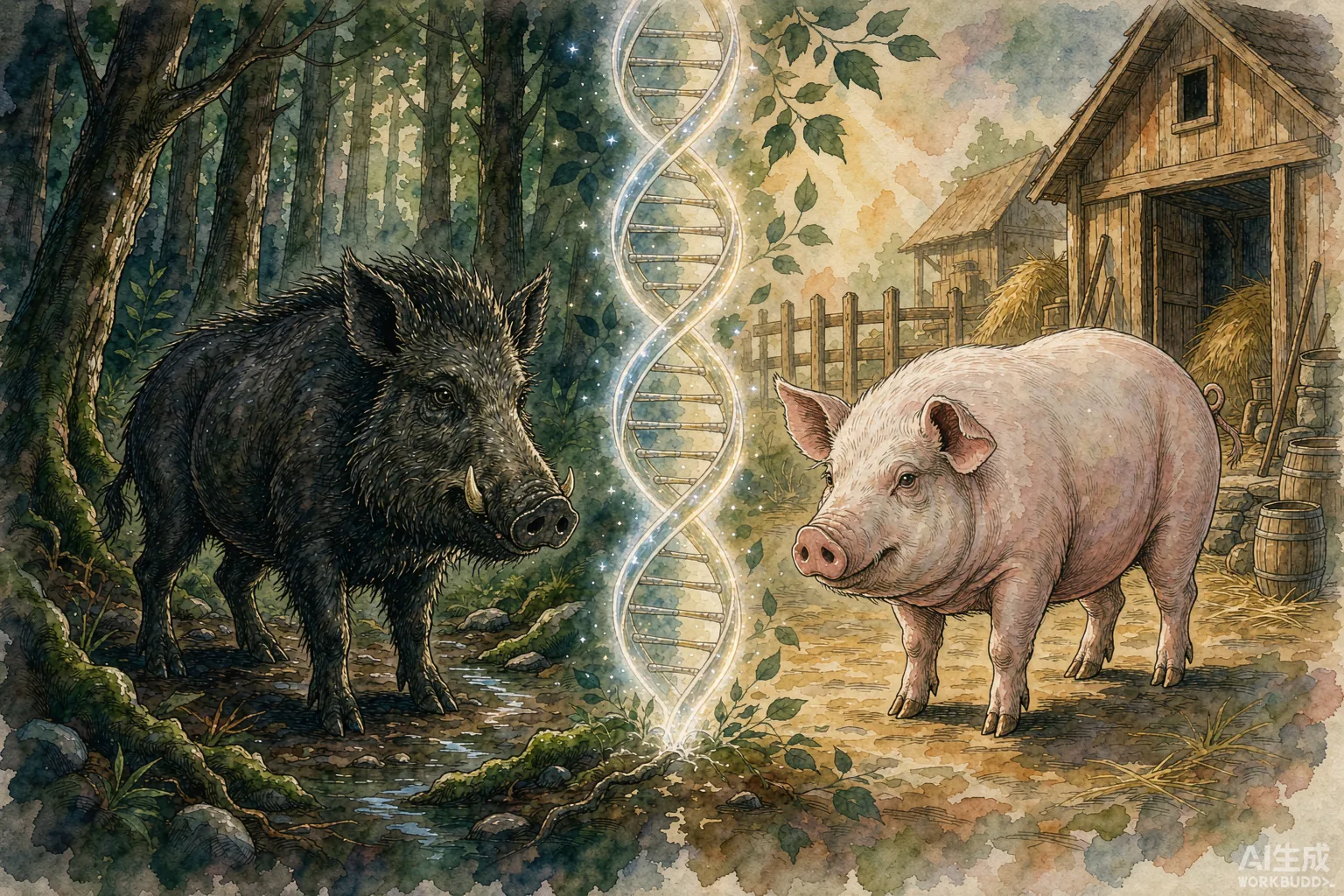
Historian's NarrationPlace the genomes of wild boar and domestic pig side by side, and you'll discover something astonishing: their genes are nearly identical. What separates them isn't "different genes," but that the "switches" of genes have been flipped—which genes turn on, when, and how strongly, all quietly rewritten over ten thousand years of domestication. Faster growth, thicker fat, shorter snouts, gentler temperament—the same musical score, but a different conductor.
◆ Science Insight: Three Real "Gene Switch" Stories
① VRTN and "Two Extra Vertebrae." Wild boars have about 19 vertebrae before the torso; most domestic pigs have 21–23—longer torsos, more meat. Research found that a variation on the VRTN gene changes its expression strength, fine-tuning the "reading" of vertebral development during embryogenesis. A flip of one gene switch rewrote the entire body blueprint.
② KIT and White Coat Color. The classic pinkish-white of domestic pigs relates to mutations in the KIT gene region; coat color genes thus became classic molecular markers for tracing domestication paths. By the way: the old saying "every family has black-haired pigs" has its genetic basis—coat color variation is never rare in populations.
③ The Neoteny Hypothesis. The short snouts and round faces of domestic pigs closely resemble the "baby version" of wild boars. One explanation: when humans continuously selected for "doesn't bite, doesn't run" gentle individuals, the overall developmental clock was "slowed down"—the cost and byproduct of temperament change was a childlike appearance. Soviet scholar Belyaev's silver fox experiment verified the same principle over decades: selecting only for "friendly" foxes resulted in floppy ears and curly tails.
Summary: Similar genotypes, vastly different phenotypes—because expression regulation (promoters, transcription factors, epigenetic modifications) is the conductor of development. This is the weight carried by the four words "gene expression."
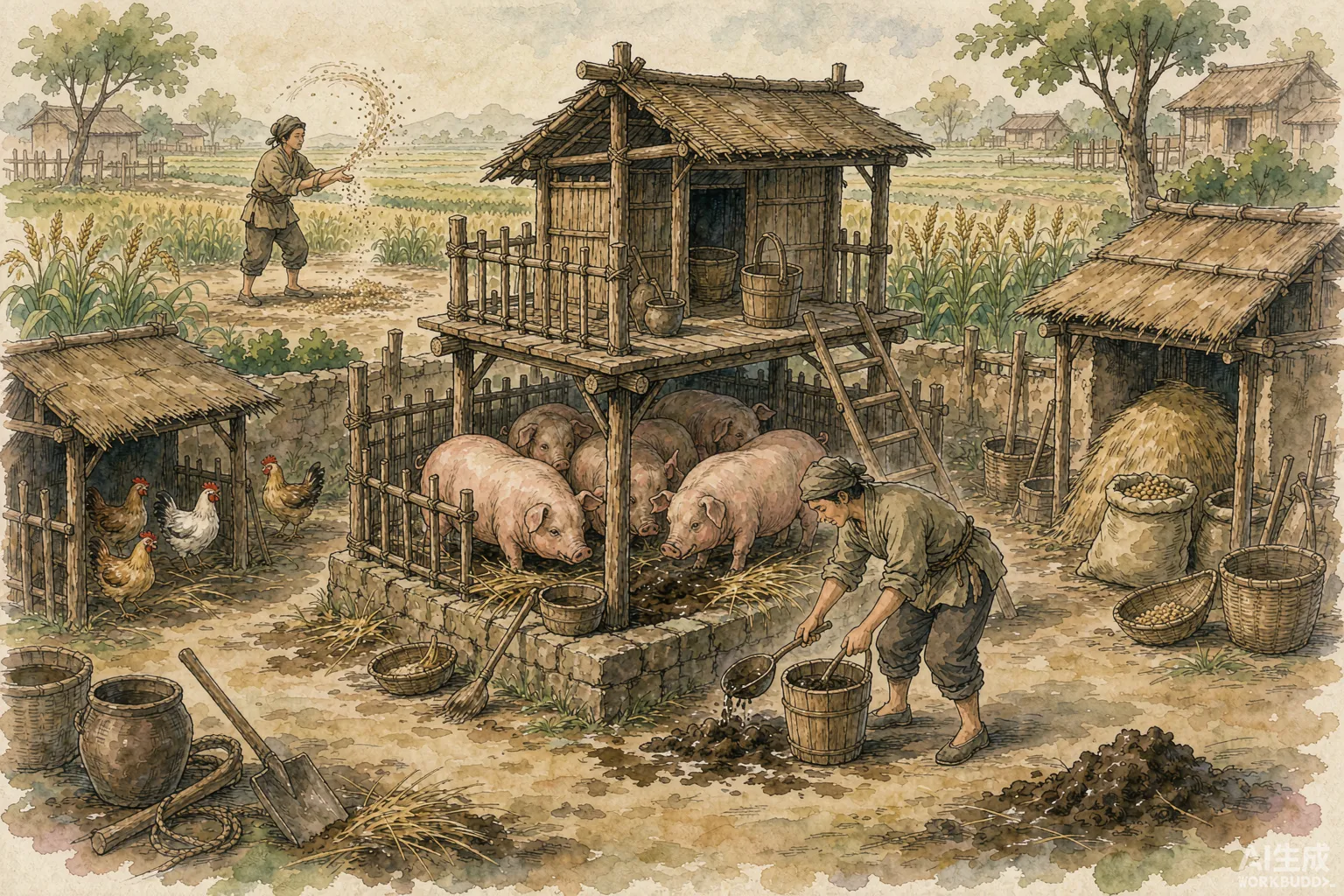
Historian's NarrationLook at the Chinese character for "home" (家): under the roof is a pig (豕). For agricultural China, this wasn't rhetoric—it was a clear accounting: kitchen scraps and field weeds went into the pig's mouth, pig manure returned to the fields to nourish crops, crops fed people, and people's surplus grain fed pigs again—the pig was the hub of the agricultural material cycle. Han Dynasty tombs unearthed ceramic pigsties with toilets on top and fat pigs below, modeling this cycle so the owner could continue managing it in the afterlife. No species could be more deeply written into a civilization's most core writing and worldview.
◆ Historian's Notes: One Character, a Fork in Agricultural History
Compare the two ends of Eurasia: in Europe, cattle were the main plowing force; pigs mostly grazed in woodlands, eating fallen acorns—they were "forest cleaners." In East Asia's intensive agriculture, pigs were almost entirely penned "living fertilizer factories + family savings accounts"—the farming proverb says "more pigs, more manure, more grain." The same species was shaped into two different roles in two agricultural systems—this is exactly where history and genetics can dialogue: different selection standards leave different gene frequencies.
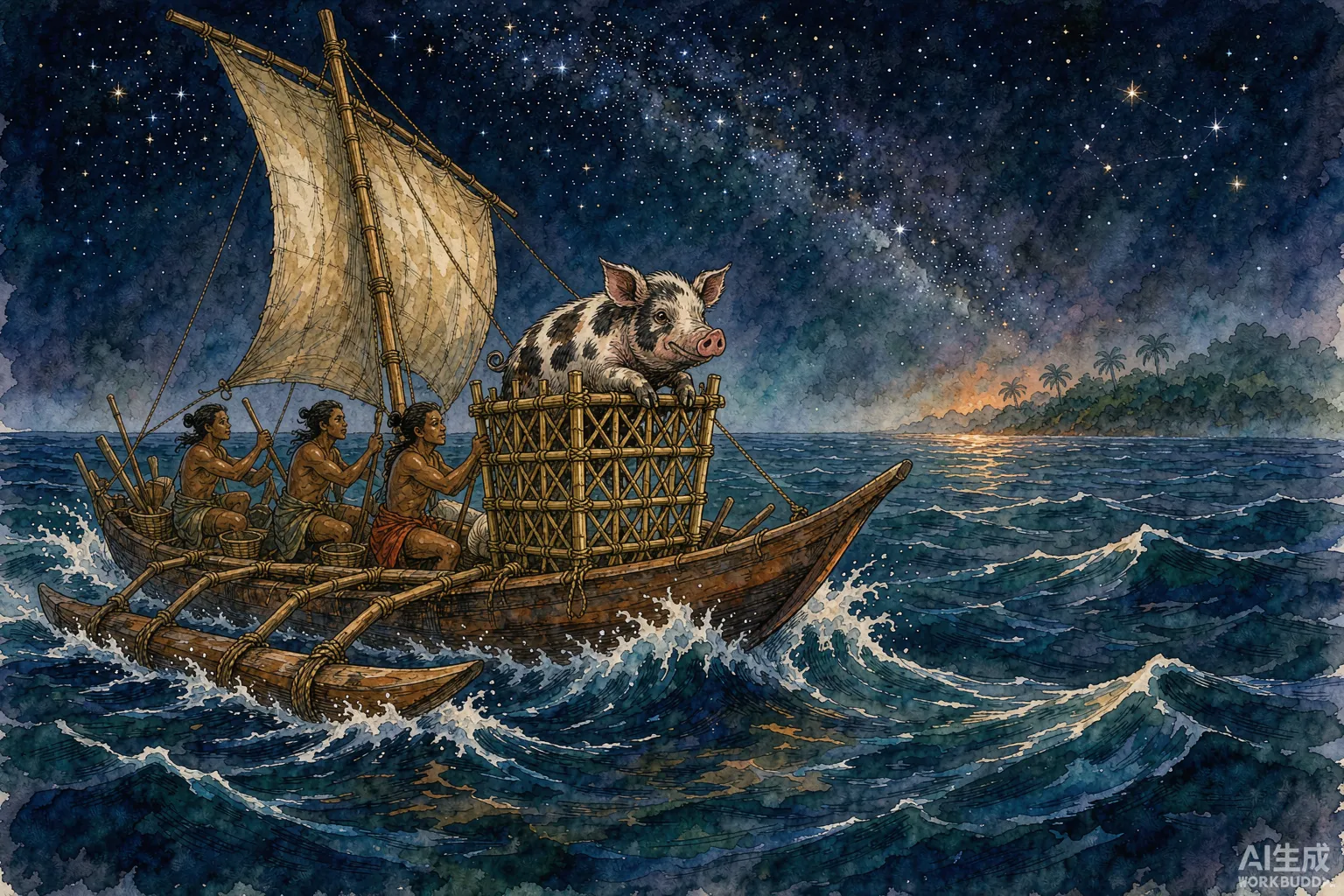
Historian's NarrationPigs were ideal voyage passengers: not picky eaters, small footprint, ate anything, and could forage for themselves on unfamiliar shores. Three thousand years ago, Polynesian navigators carried pigs, chickens, and dogs across the Pacific, scattering Eurasian pig species across island after island. In the sixteenth century, Spanish explorers brought pigs to the Americas; escaped herds rapidly multiplied into "wild boar tides" in the Mississippi Valley. Today's feral pigs in Hawaii and wild boar herds in the American South are living fossils of those voyaging histories—every feral pig is a history book shelved in the wrong place.
◆ Science Insight: Feralization—A Reverse Evolutionary Experiment
Remember Chapter 3's preview? When domestic pigs return to the wild, selection pressures instantly flip: humans no longer shield them from predators and harsh winters, so tusks, long legs, and coarse hair reappear within just a few generations. The key: the genes for those traits never disappeared; their expression was simply "turned down" by the domestic environment—the feral environment turned them back up. This is evolution's most vivid live lesson: evolution is happening all the time, just waiting for selection to change its mind.
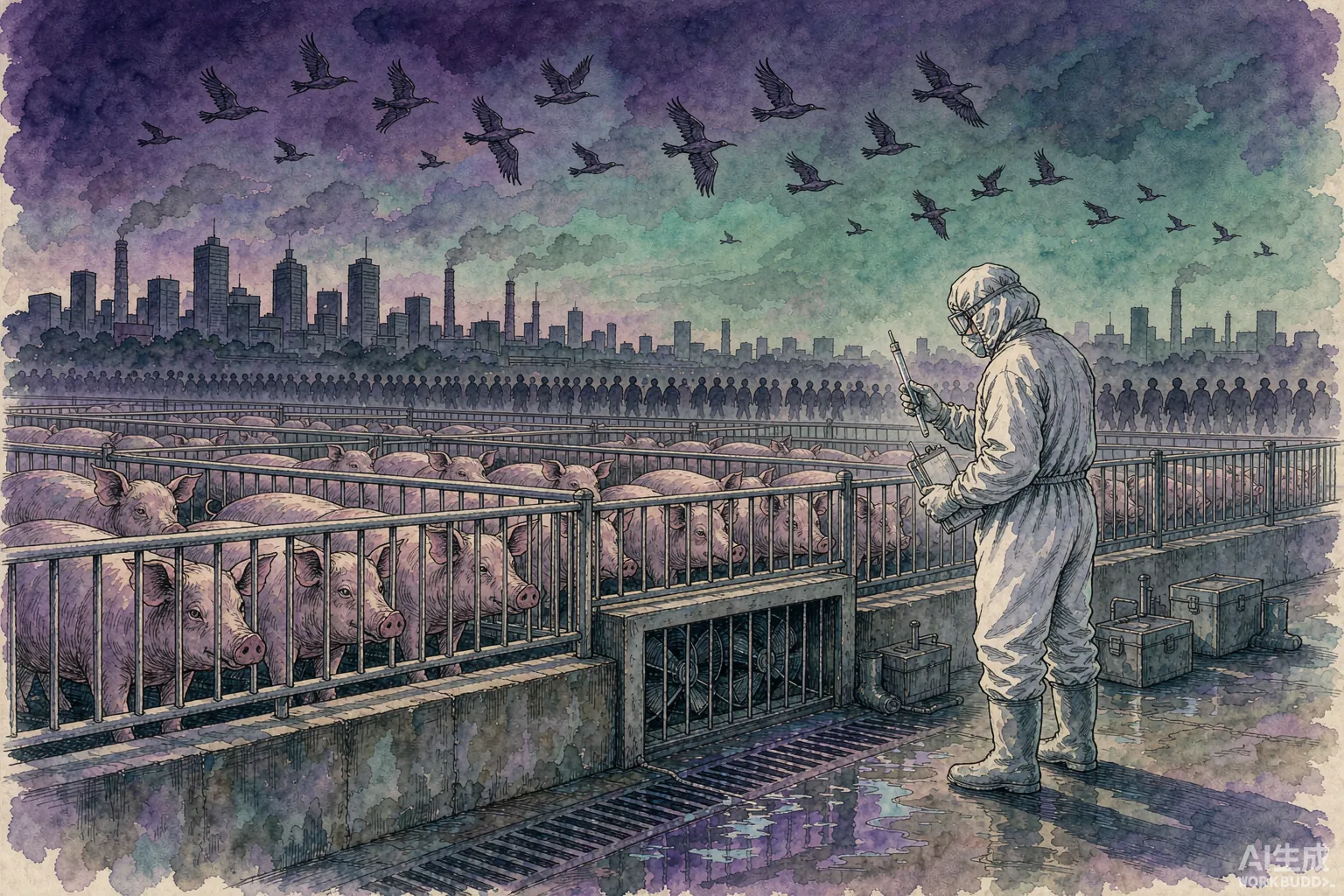
Historian's NarrationPigs and humans are so close that we also share each other's pathogens. The H1N1 influenza that swept the globe in 2009 was a quadruple reassortant virus combining pig, avian, and human influenza gene segments. Pig respiratory tracts happen to carry both human influenza and avian influenza virus-preferred receptors—making pigs "mixing vessels" where influenza viruses exchange genes. Humans brought billions of pigs and chickens into their own ecosystems, also moving the virus's testing ground right next door.
◆ Historian's Notes: The Process of Civilization Is Also the Process of Pathogens
Domestication and urbanization crammed humans, livestock, and poultry together as never before: measles descended from a close relative of rinderpest virus, smallpox and cowpox belong to the same branch, influenza reassorts in pigs and birds. Disease history reminds us: every time civilization closes the distance with animals, it also opens a new channel for genetic exchange (including pathogens). The lesson of 2009 is not panic, but monitoring, quarantine, and animal husbandry hygiene—responding to ecology with institutions.
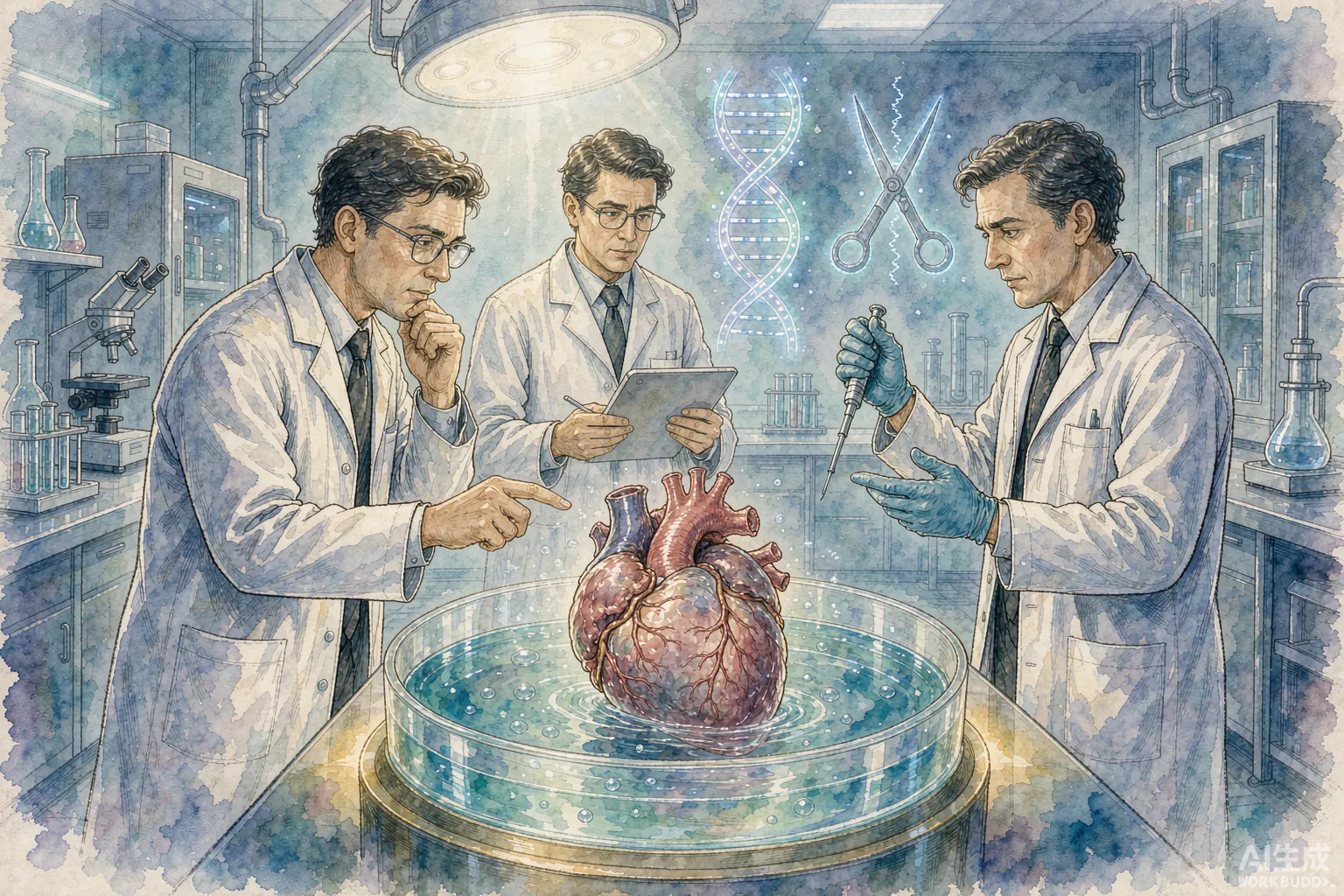
Historian's NarrationPig and human organs are astonishingly close in size and physiological parameters, making pigs humanity's "spare parts warehouse" and "testing ground." From 1922 onward, animal insulin extended countless diabetic lives—pig insulin and human insulin differ by just one amino acid; pig heart valves still work in millions of human chests today. In 2022, the world's first multi-gene-edited pig heart was transplanted into a human body. CRISPR gene scissors allowed humans for the first time to precisely "rewrite" the pig genome: knocking out the GGTA1 gene that triggers hyperacute rejection, then inserting human complement regulatory genes.
◆ Science Insight: From Fences to Bases—The Ultimate Form of Artificial Selection
Gene editing can be understood as directed, parallel "artificial selection": breeders waited for many generations of random mutations; scientists directly edit target sequences. Ten thousand years ago, early people fenced in the first wild boar; today, we rewrite its genome with base editing—the tool changed from fence to base, but the logic remains the same: humans have always been participating in another species' evolution.
But beware the deep waters: from "selecting existing variation" to "writing desired variation," humans for the first time hold both the pen and paper of evolutionary theory. This brings not just technical questions—which edits should have boundaries, how should pig welfare and ethical status be defined—but civilization asking itself questions.
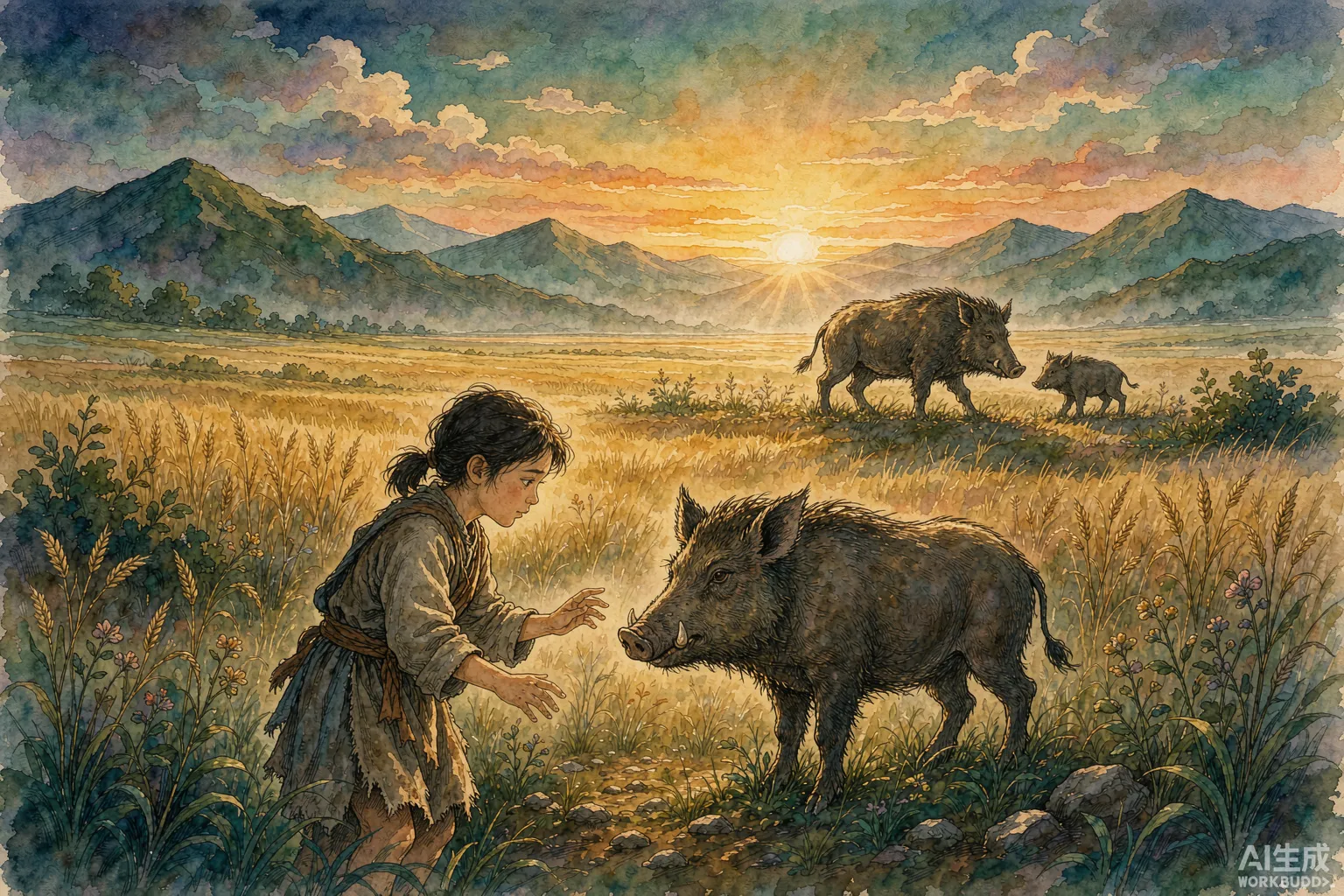
Historian's NarrationTen thousand years is but a blink in geological time, but for pigs it was over two hundred centuries of companionship. Evolutionary theory tells us: humans are not the masters of all things, but distant relatives who shared a common ancestor with pigs tens of millions of years ago—our genomes are so similar that its heart can beat in our chests. Domestication, at the genetic level, is a bidirectional, ongoing writing: we rewrote the pig's expression, and the pig also rewrote our agriculture, language, medicine, and future.
So when you meet that young pig by the field, its snout still bearing traces of little tusks, please remember the shared conclusion of these two volumes: The difference between humans and all other things is in degree, not in kind. Our encounter with horses taught humanity "distance is power"; our encounter with pigs taught humanity "relationship is evolution." The next encounter—whether at the dining table, the pasture, the operating room, or in the new age of algorithms and species—may you recognize it, and think it through.
◆ Three Questions for the Whole Book (Discuss with classmates, then write down your answers)
1. If pig domestication were left entirely to "natural selection," how long would it take? What does this thought experiment reveal about where artificial selection is "fast"?
2. Using the "conductor and score" metaphor, explain to your family: why do wild boars and domestic pigs, with nearly identical genes, look so different?
3. Gene editing allows humans for the first time to "write" another species. From the pig's ten thousand years, which historical lesson should we carry into this new era?